


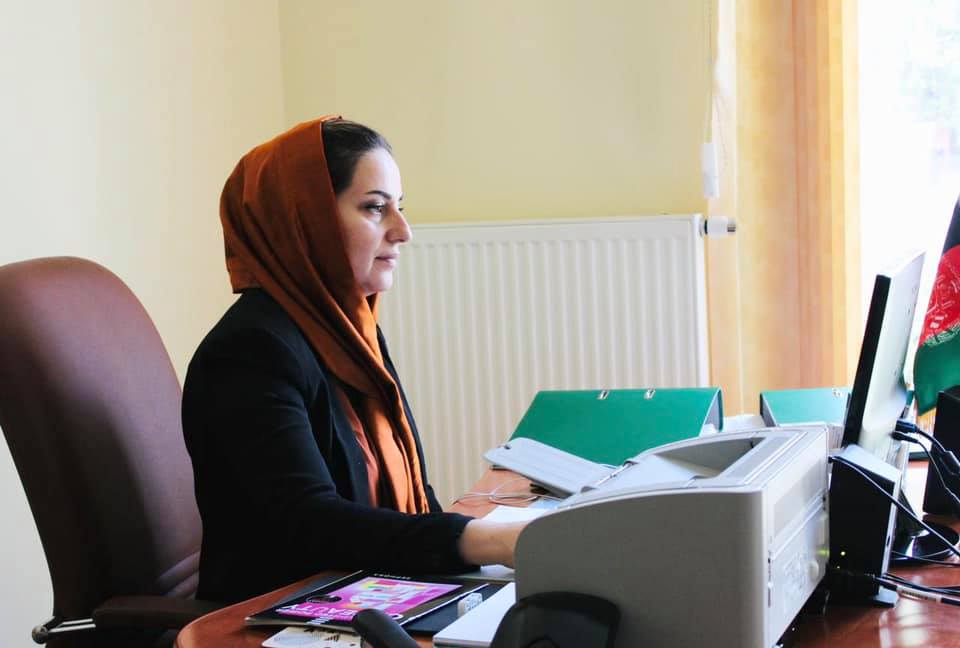
By Negareh Mirdad
August 15th is a date both old and deeply alive in the collective memory of the Afghan people. For me, it is not merely a political milestone, but a profound wound on a heart that beat for Afghanistan for many years. I am a woman from a generation that grew up under the shadow of war, yet with hope I pursued education, built a life, struggled, and ultimately witnessed collapse.
I spent one and a half decades in Afghanistan’s diplomatic corps. With every signature, every report, every official meeting, I felt I was smiling at a girl who once wept behind closed school doors; a girl who, displaced and with empty hands but a heart full of dreams, chased knowledge, hoping one day to contribute to rebuilding her homeland. And I became that girl—wearing the diplomatic suit not for honor, but for a mission rooted deeply in my heart.
But on the day of the fall, everything was swept away. I was on a mission in a distant country when I heard the president had fled. The image of the Taliban in the presidential palace pierced my heart like a dagger. I stayed awake for forty-eight hours. My tears would not stop, nor would my mind find peace. It was as if all those years of struggle, standing firm, and enduring suffering suddenly vanished like smoke in the air.
I knew the Taliban well—not from media reports, but from the reality of my life. I was a child of the generation that suffered under their first regime. The sounds of explosions, the fear of stepping outside, and nightmares woken by my mother’s screams are etched into my childhood memories. When I entered the workforce as a woman, every day, every step, every piece of clothing, every word I spoke was a battle. I was always prepared to never return. I would tidy my home every morning knowing I might not come back. I survived several bombings, yet my soul returned more wounded each time.
The Taliban are not merely a political group to me or to the people of Afghanistan. The Taliban are the killers of our dreams; the killers of our values, culture, faith, and families. In our family’s story, the Taliban orphaned children, left mothers bereaved, brought grief to fathers, and silenced women’s smiles. They showed no mercy even to our land—from burning vineyards in the north to war crimes and gender apartheid. For us, the Taliban are not a bitter memory; they are an open wound bleeding every day.
My struggle was never solitary. Our fight rose from the Hindu Kush mountains and the streets of Kabul; where proud sons and daughters stepped forward with the same pain, rage, and hope. I fought in the halls of diplomacy; they fought in mountains and alleys. Together, we narrated a shared pain. We fought—not for politics—but to save a future being plundered.
With the Taliban’s return, not only did the system collapse, but the dream of a nation was stolen. Women disappeared again—from workplaces, classrooms, and political arenas. I, a woman who fought for her voice to be heard for years, watched everything fall silent in a blink. My family remained in Kabul. We came from families that had sacrificed for years, which deepened my worry. Hearing their nightly messages choked my breath with fear, helplessness, and uncertainty.
But on that third night, I made my decision: I would not surrender. If I had nothing left to fight with, my voice, my pen, and my memories were still alive. I spoke, I wrote, I delivered speeches. In every gathering, every meeting, every media outlet that accepted me, I spoke of Afghanistan: of girls barred from school, women erased, and people caught between two darknesses.
The diplomatic corps was no longer the orderly structure it once was. The republic’s ambassadors scattered; some bowed to the Taliban, others remained unsupported and directionless. But wherever we stood, we built a bastion in the name of the republic and the memory of those days. Some broke, some grew weary, but a faint light of hope remains. There are still fighters who refuse to let our story’s flame die out.
Sometimes I think if that day of fall had not come, I might still be drowning in formal meetings, still cautiously smiling behind diplomatic walls. But today, I am freer—not from pain, but from the fear of silence.
For me, August 15 is a day of mourning; a day when thousands of mothers, fathers, children, and women buried their dreams in the soil. Yet this day also holds the seed of hope. If we are still alive, still writing and speaking, it means the Taliban have not won—but neither have we. My voice, the voice of Afghan women, still resonates. And as long as one woman in Afghanistan is alive and writing, freedom still breathes.
I will continue on this path—with tears, memories, pain, but most importantly, with faith. I am still that girl who cried behind the school doors and one day became a diplomat. Today, in exile, I remain that same girl—only with a sharper pen and a stronger voice. Afghanistan is still alive, albeit wounded.


