


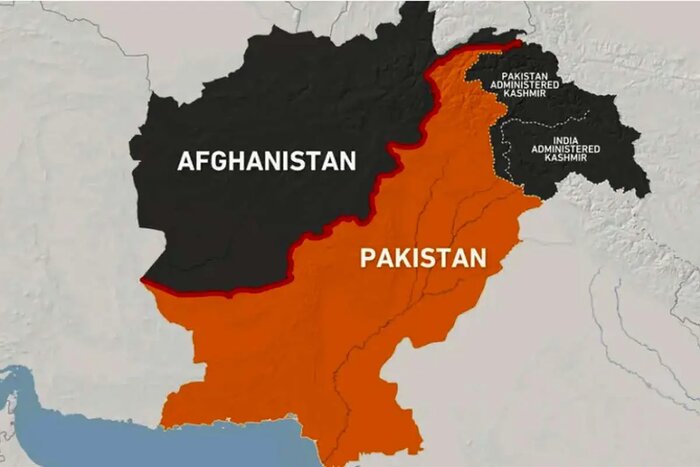
By: Layla Noor
Afghan migrants living in Pakistan describe a worsening situation following recent border tensions between Taliban forces and Pakistani military. Many report landlords refusing to renew rental contracts for migrants without legal residency documents, hiking rents, or using housing as leverage to pressure them out. These growing hardships are forcing some families to fear losing their homes and ending up on the streets.
“I never imagined that after fleeing conflict, I’d face this level of rejection in a neighboring country,” says Sahar, a 28-year-old mother of three now living in Islamabad. “Landlords suddenly demand proof of residency or kick us out. It feels like we are paying for a conflict that isn’t ours.”
Following clashes near the border, Pakistani authorities have tightened their stance on Afghan migrants. Local landlords, wary of legal complications, have increased rent or outright refused tenancy renewals. This comes alongside growing societal distrust, which many say has turned into outright hostility.
“I have lived here for five years with my family,” explains Ahmad, a teacher from Nangarhar province. “But now, every landlord demands papers I don’t have, or they raise rents beyond my means. Some neighbors have stopped talking to us. It’s like we’re invisible until someone wants to blame us.”
Human rights journalist Mariam Hamidi, based in Islamabad, calls the situation “a human tragedy unfolding quietly.” She shares, “When governments clash, ordinary people bear the brunt. I’ve spoken with families who feel desperate, facing eviction without alternative shelter. The fear is palpable.”
Several Afghan activists in Pakistan emphasize that these policies violate international norms protecting refugees and migrants. “Under international law, evicting refugees without proper procedures is illegal,” says Farid Khan, a legal aid worker. “Pakistan has obligations under the 1951 Refugee Convention and its protocols, even if it is not a signatory, to uphold humanitarian principles.”
Naila, a young woman who recently arrived from Herat, adds, “It’s painful to feel unwanted in a place you hoped would be safe. I have no documents yet, and no one is willing to help me find a job or a home.”
Furthermore, a statement from the UNHCR underscores the urgent need to protect displaced Afghans across the region. “We urge Pakistan to respect human rights and provide safe, legal shelter options for all migrants and refugees,” said a UNHCR spokesperson. “Evictions without alternatives exacerbate vulnerabilities and violate basic human dignity.”
In the past week, reports have emerged of over 300 Afghan families facing forced evictions or pressure to leave their homes in Islamabad alone. Local NGOs warn that without immediate intervention, more families risk homelessness and further marginalization.
Samiullah*, a father of four, recounts, “The landlord told me, ‘Your presence here is no longer welcome.’ What am I supposed to do? Return to a country ruled by the Taliban where my children have no future? Stay here and become homeless?”
Pakistan’s government has yet to provide clear assurances or policy changes to ease the growing humanitarian crisis. Meanwhile, grassroots organizations like the Justice-Seeking Women’s Movement of Afghanistan are calling on the international community to intervene and protect Afghan migrants’ rights.
Laila, a volunteer with the movement, explains, “These people escaped war and now face neglect and hostility. It’s a double injustice. We need coordinated support from governments and international agencies to ensure safety and dignity for all displaced Afghans.”
As tensions simmer on the border and migrant communities struggle, voices from Kabul to Islamabad plead for recognition, justice, and urgent humanitarian aid.
Names changed to protect privacy.



https://shorturl.fm/6EWwN
https://shorturl.fm/0OBl0
https://shorturl.fm/QGwD2
Share your link, earn rewards—sign up for our affiliate program!
Partner with us and enjoy recurring commission payouts!
https://shorturl.fm/KZUvI