
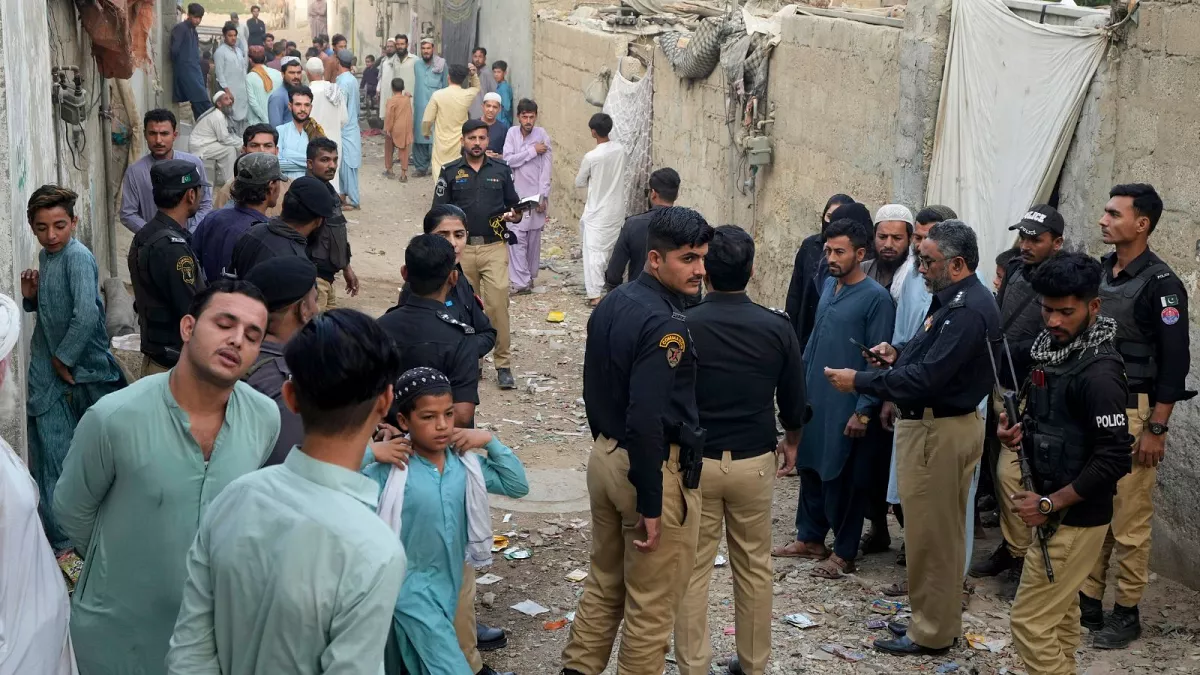
Following the Pakistani government’s announcement of a deadline for deporting undocumented migrants, Afghan women activists and protesters who sought refuge in Pakistan have expressed grave concerns about the threat of forced return to Taliban-controlled Afghanistan. These women, compelled to flee their homeland due to their advocacy and protests against Taliban restrictions, state that returning to Afghanistan would expose them to life-threatening dangers and severe repression. This report narrates the stories of five courageous Afghan women who have faced immense challenges, from protesting in the streets of Kabul to living precariously in Islamabad.
Sahar: From Kabul to a Life in the Shadow of Fear
Sahar, 32, once led a peaceful life in Kabul. As a women’s rights activist and organizer of educational workshops for girls, her life changed drastically when the Taliban regained control in 2021. Targeted for her outspoken defense of women’s rights, Sahar received threats. “One night, I received a message warning that my life was in danger if I continued my activism,” she recalls.
Sahar fled to Pakistan in 2022, entering Islamabad on a temporary visa. However, the high costs of visa renewals and Pakistan’s stringent policies have placed her in a precarious situation. Living with her family in a poor neighborhood in Islamabad, she rarely leaves home, fearing arrest by the police. “I wake up every day with anxiety,” Sahar says. “Returning to Afghanistan would mean the end of my life.”
Maryam: A Mother Seeking a Safe Future for Her Children
Maryam, 45, a mother of three, was an advocate for women’s education and empowerment in Kabul. She participated in street protests against the Taliban’s ban on girls’ education and faced repeated threats. In 2023, Maryam illegally entered Pakistan to secure a better future for her children. “I didn’t want my children to grow up in a country where they couldn’t dream,” she says.
Life in Islamabad is fraught with challenges for Maryam. Residing in a small, remote house without legal documentation, she lives in constant fear of deportation. “Every sound of a car in the street terrifies me. I don’t know if the police are coming to arrest me,” she says. Maryam worries for her children’s future, adding, “I fled for them, but I don’t feel safe here either.”
Leila: The Voice of Equal Education in Exile
Leila, 27, was a prominent advocate for girls’ education in Afghanistan, organizing programs to provide girls with access to books and learning. After a brief detention by the Taliban in 2021, she fled to Pakistan. “The Taliban threatened me for distributing books, claiming girls’ education was forbidden. But I couldn’t stay silent,” she says.
In Islamabad, Leila tried to continue her educational initiatives but was forced into hiding due to legal restrictions and police pressure. “I live with the fear that I might be sent back to Afghanistan today. Returning is a nightmare,” she says. Leila urges the international community to prevent the forced deportation of Afghan women activists.
Shakila: From Street Protests to Islamabad’s Hideouts
Shakila, 30, was a key figure in women’s protests in Kabul, organizing demonstrations against Taliban policies, including bans on women’s work. Forced to flee in 2022, she recalls, “In Kabul, we fought for basic rights like work and freedom, but the Taliban responded with violence.”
In Islamabad, Shakila faces numerous challenges. “The Pakistani police raid migrant homes and threaten deportation without regard for our situation,” she says. Awaiting resettlement to a third country, she calls on the international community to address the plight of Afghan women activists. “We fought for freedom, and now, even in exile, we don’t feel safe,” she adds.
Freshta: Solidarity in Exile
Freshta, 35, a human rights activist, fled to Pakistan after being detained by the Taliban in Kabul and coerced into a false confession. Having protested against Taliban restrictions, including mandatory hijab policies, she says, “The Taliban forced me to say I was acting on foreign orders, but I was only fighting for Afghan women’s rights.”
In Islamabad, Freshta has continued organizing protests in support of Afghan women, chanting “Women, Life, Freedom” at recent gatherings. However, Pakistan’s pressures place her at risk of deportation. “We escaped the Taliban for safety in Pakistan, but now we feel trapped here too,” she says.
Global Concerns and Calls to Halt Deportations
The United Nations High Commissioner for Refugees (UNHCR) has expressed alarm over the forced deportation of Afghan migrants from Pakistan, urging the government to halt the process. The agency emphasizes that returning women and girls at risk due to their activism violates human rights and could exacerbate Afghanistan’s humanitarian crisis.
Ahmad Ali, a lawyer for migrants in Islamabad, told media, “Deporting women’s rights activists to Afghanistan, where they face likely torture or death, is inhumane.” He calls for urgent international action to protect these women.
Conclusion
The stories of Sahar, Maryam, Leila, Shakila, and Freshta reflect the struggles of thousands of Afghan women who sought refuge in Pakistan after the Taliban’s takeover. Having fought for their basic rights in Afghanistan, they now live in fear of deportation and the prospect of returning to Taliban rule. The international community and human rights organizations must take immediate action to prevent the forced return of these brave women to an unsafe environment. Their voices must be heard, not silenced.
Note: The names mentioned in this report are pseudonyms to protect the individuals’ safety.
From Resistance to Exile: Afghan Migrant Women’s Defiance Against the Threat of Return to Taliban Rule

Hamia Naderi
Hamia Naderi (b. 1992, Badakhshan) is an Afghan journalist and human rights activist, recognized as a fearless voice for women’s rights and social justice. With over...
Hamia Naderi (b. 1992, Badakhshan) is an Afghan journalist and human rights activist, recognized as a fearless voice for women’s rights and social justice. With over a decade of experience, she has documented migration, exposed Taliban gender apartheid, and amplified silenced Afghan women. A journalism graduate of Badakhshan State University, she has worked with multiple Afghan and regional outlets since 2015 and earned recognition for her bold, investigative reporting. Today, as a member of the Federation of Afghan Journalists in Exile and the Afghanistan Women’s Justice Movement, she continues to inspire and mobilize for change.


Leave a Comment
