


By Somaya Wafa
Four years ago, on the morning Kabul lost its breath, the air reeked of flight and fear. Dawn had barely broken when the news pierced the city like an arrow: “The government has fallen… the Taliban have entered.” The streets filled with faces watching one another—not in greeting, but in readiness to flee. Women clutched their scarves, children were held tight in their mothers’ arms, and men hurried home as though a heavy shadow had dropped from the sky onto the city.
At that moment, I was sitting in a language learning center. When the news reached us, I set my pencil down on the desk and ran into the street without saying goodbye. I knew the way home, yet every alley felt unfamiliar. Near the 13th Police District, I heard the shouts: “Go back to your homes! Kabul is in Taliban hands!” Fear settled on my shoulders like frozen weight.
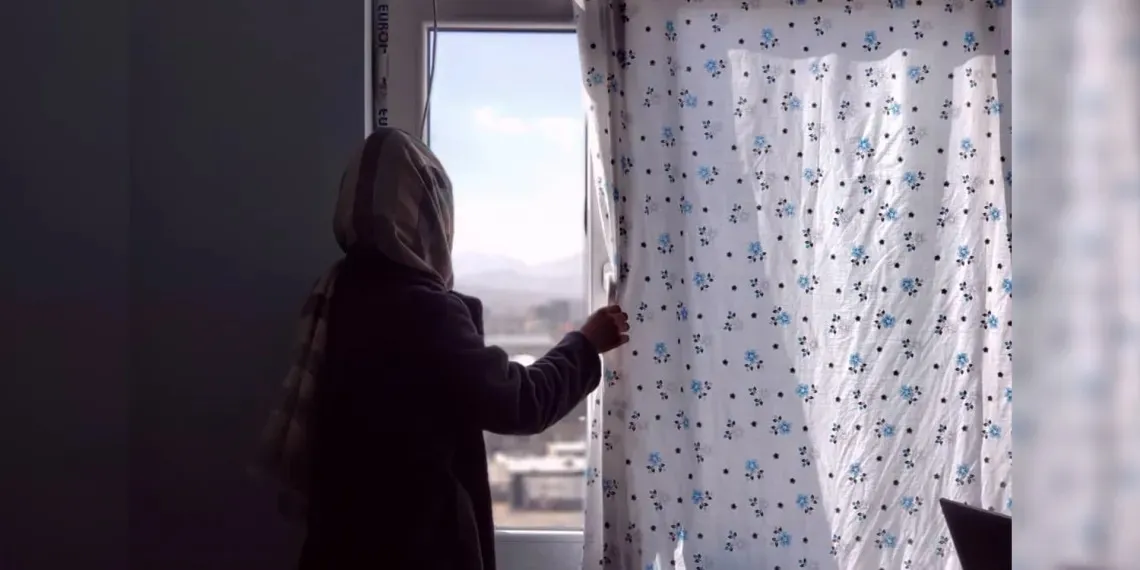
From that day on, color and smiles vanished from the city. Each morning, we woke to new reports of restrictions, arrests, and bloodshed. Schools and universities were locked, but the heaviest locks were placed on the lives of women. No work, no education, no breathing without permission. Even the home—meant to be a refuge—turned into a prison.
A group of us women refused to remain silent. We shouted in the streets of Kabul, holding signs and demanding the rights stolen from us. Our voices were met with batons, threats, and prison cells. Torture, insults, and threats against our families drove us, one by one, to the edge of escape. Some fled to Iran, others to Pakistan, and many vanished into distant exiles. I left too—but I did not take my voice with me. I still shout across borders, because every day brings new reports of women being jailed, tortured, or disappearing without a trace.
The Taliban have cast the shadow of prison not only over women, but over the entire population. Joblessness, insecurity, and relentless vengeance have driven thousands to migrate. In exile, we taste the bitterness of humiliation and discrimination; sometimes, simply being Afghan is enough to invite stares and cutting words.
But for how long? Neither our homeland grants us peace, nor do foreign lands feel like home. Some who were forced back from neighboring countries never returned—either they died in Taliban prisons, or they vanished in silence. There is no general amnesty here, only a list for revenge.
Yet I have not lost hope. The day must come when these chains are broken, when women can once again walk the streets of their homeland, and when the displaced return home with smiles on their faces.


