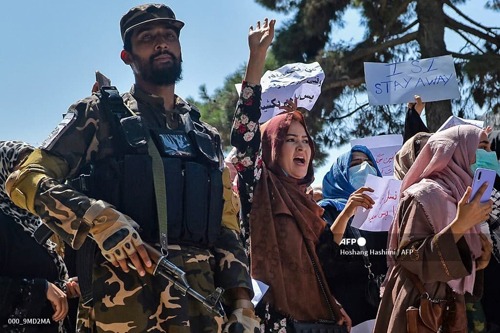
 Four years have passed since the fall of Kabul and the Taliban’s return to power—a moment that plunged Afghanistan into one of the darkest chapters of its modern history. For Afghan women, these four years have not simply been about political change; they have been about a systematic dismantling of their humanity, identity, and existence from public life.
From Hope to Erasure
On August 15, 2021, Kabul fell in a matter of hours. What followed was not only a change in government but the rapid resurrection of an ideology that had once stripped women of every basic right. Within weeks, the Taliban’s “decrees” began rolling out—each one designed to erase women from the social, political, and economic fabric of the nation.
Girls were banned from secondary and higher education. Women were ordered out of most jobs, forbidden from traveling without a male guardian, and denied entry to public spaces such as parks, gyms, and bathhouses. The most ordinary freedoms—walking down a street, speaking on television, working in a clinic—became acts of defiance.
Codifying Oppression
The Taliban justified these policies through their rigid interpretation of Sharia, turning religious rhetoric into state machinery for gender apartheid. These decrees were not random—they were calculated, methodical, and reinforced through fear. The goal was clear: to relegate women to invisibility, to make their absence feel “normal.”
The world watched as women’s faces disappeared from billboards, their voices from radio stations, and their presence from classrooms. In effect, Afghan women were rendered prisoners in their own homes—without trial, without crime, without end.
Crimes Against Humanity
The U.S. State Department’s 2025 annual human rights report states plainly what many Afghan women have lived and known: the Taliban’s actions amount to crimes against humanity. Citing findings from Richard Bennett, the UN Special Rapporteur, the report documents enforced disappearances of women human rights defenders, legal experts, and protesters. Many were detained without charge; some were never seen again.
Forced and underage marriages have surged. In 2023 alone, 39% of Afghan women aged 15–49 were married before the age of 18. Poverty and the ban on girls’ education have driven desperate families to sell their daughters, some as young as nine. In one camp in Herat province, 118 girls were sold as child brides, while 116 other families had daughters listed “for sale.”
Recruitment of child soldiers has also persisted—at least 342 boys under 18 were brought into Taliban ranks last year, with 150 deployed to active combat. Bennett warns these practices often lead to other grave abuses: rape, torture, forced pregnancy, and forced labor.
Silencing the Witnesses
Independent journalism has become a dangerous act. The Taliban’s restrictions on free expression have been paired with targeted violence against journalists, censorship of media content, and harassment of anyone reporting abuses. Former soldiers, activists, and ordinary citizens suspected of opposing the Taliban have been killed in reprisal attacks. Religious minorities have faced persecution, and human trafficking has flourished under the regime’s impunity.
Global Response: Weak and Compromised
While international condemnation has been loud, action has been weak. Even the integrity of some human rights reports has been questioned. Human Rights Watch recently accused the U.S. State Department of altering or omitting key sections from its global human rights review, allegedly to protect friendly governments from scrutiny. Such omissions, HRW warned, risk not only the truth but also the safety of human rights defenders and the credibility of global advocacy.
Four Years On: The Human Cost
For Afghan women, these four years have been a relentless battle against disappearance—disappearance from schools, from workplaces, from decision-making spaces, from history itself. Yet, they continue to resist: through underground schools, covert networks, online protests, and public demonstrations met with batons, bullets, and prison cells.
Their resilience is a refusal to let the Taliban write the ending to their story. But resilience alone cannot dismantle a system designed for their erasure. Without sustained international pressure, concrete sanctions targeting perpetrators, and pathways for safe refuge, the fourth anniversary of Taliban rule will not be a turning point—it will be just another year of impunity.
The Unfinished Fight
Afghan women have long been the first to bear the weight of Afghanistan’s wars and the last to benefit from its fleeting peace. Today, their struggle is not just for rights—it is for survival, dignity, and visibility in a country where the rulers believe their existence in public is a crime.
History will judge how the world responded to these four years. The question is whether the judgment will be one of courage—or complicity.