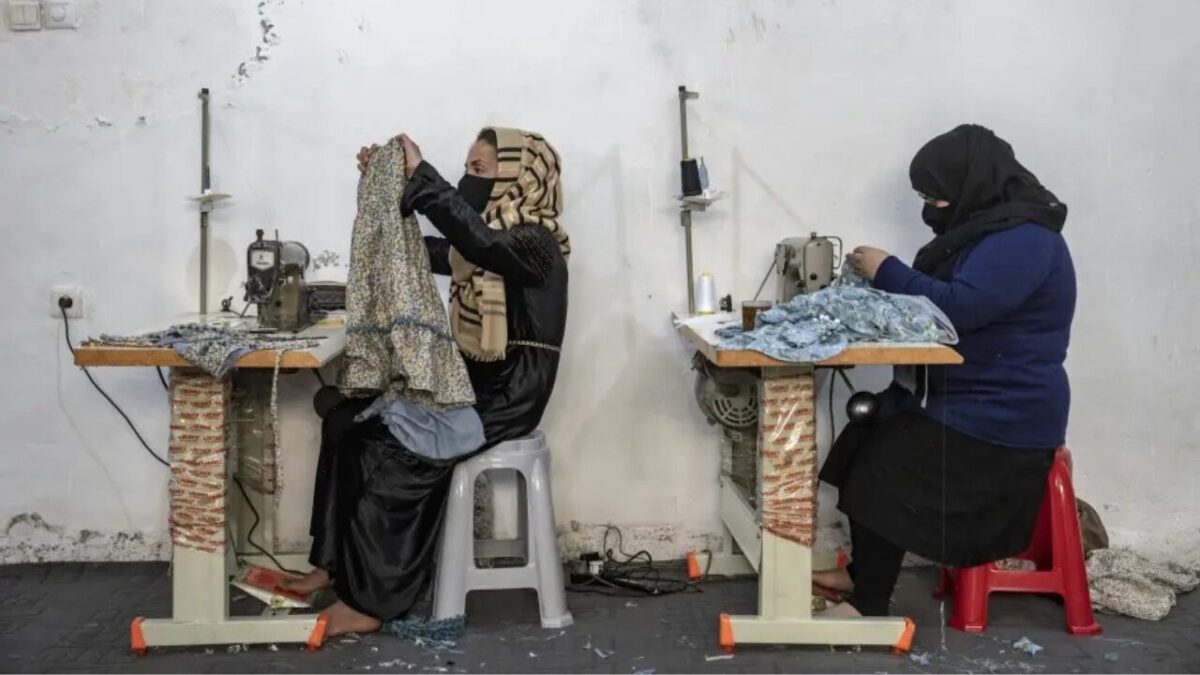
On the occasion of International Workers’ Day (May 1), Human Rights Watch (HRW) stated that Taliban’s *Amr bil Ma’ruf* (morality enforcement officers) frequently harass and sometimes detain women who leave their homes to work.
In a statement, HRW renewed the call for “Bread, Work, Freedom” for Afghan women, emphasizing their right to work and liberation from the Taliban’s systematic oppression.
Over three and a half years since Afghan women from all ethnic backgrounds first took to the streets demanding ‘bread, work, freedom,’ their call is more urgent than ever, the statement reads.
HRW noted that since the Taliban’s return to power, severe restrictions have been imposed on women, including bans on most professions and drastic cuts to paid employment, even in aid-related sectors. The Taliban’s policies have effectively shut down nearly all women-run businesses, including beauty salons that previously employed around 60,000 women.
Even where no official bans exist, the Taliban have implemented measures that effectively prevent women from accessing paid jobs — such as requiring a male guardian, banning single women from work, and prohibiting women’s voices from being heard in public, the group added.
With the deepening economic crisis, women’s access to formal employment is now nearly impossible. Before the Taliban takeover, women’s labor force participation was about 19 percent; now it has dropped to just 5 percent. This decline has pushed more families into extreme poverty, in a country where only 16% of citizens say they can meet their daily material needs comfortably, and 22% can barely meet their basic needs.
HRW stressed that as Afghan women continue to resist their erasure from public life, the global community must stand in solidarity with their struggle for rights.
The organization also reminded that Afghanistan, as a member of the International Labour Organization since 1934, is legally obligated under international law to eliminate discrimination against women in the workplace.