
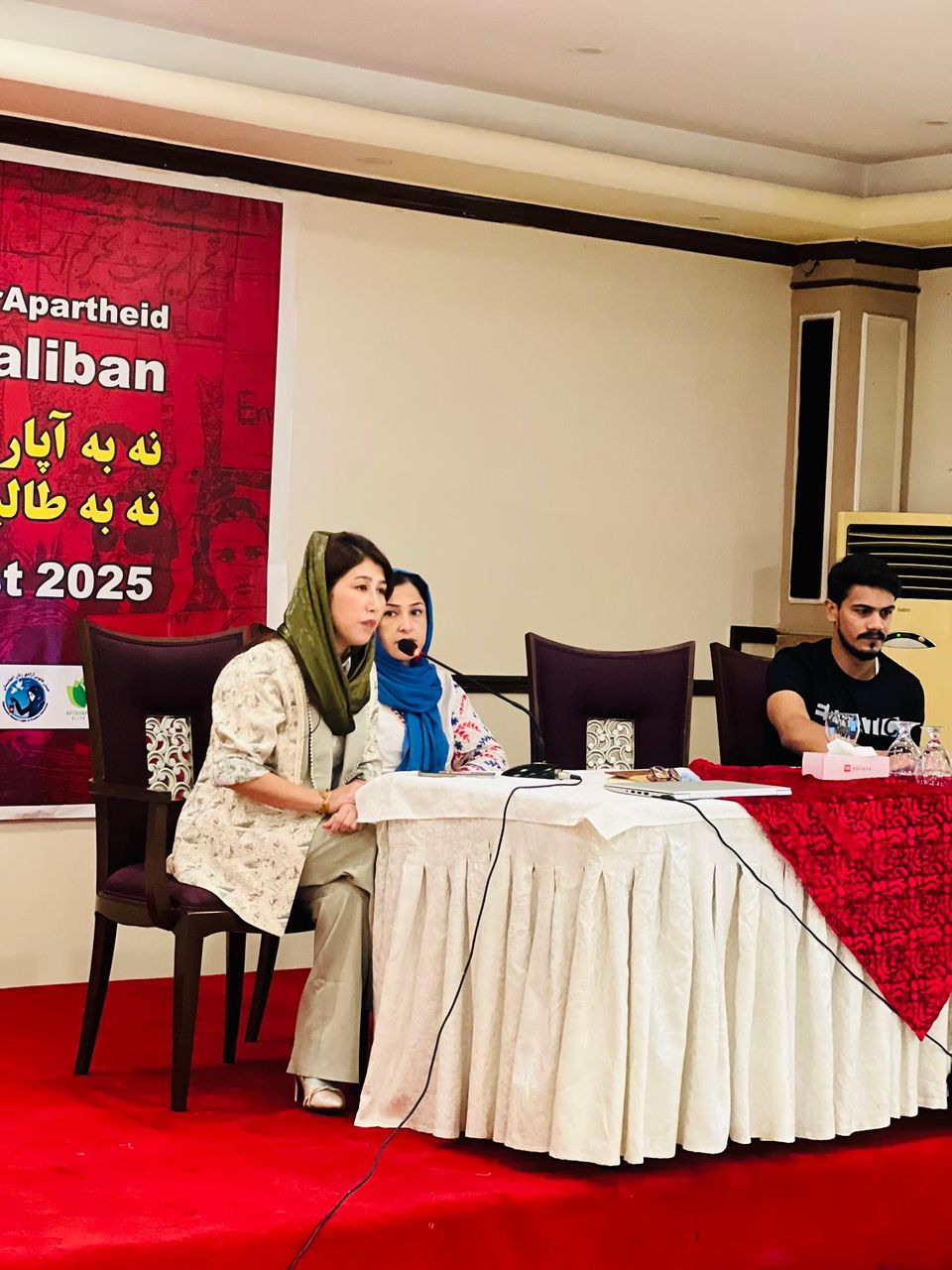


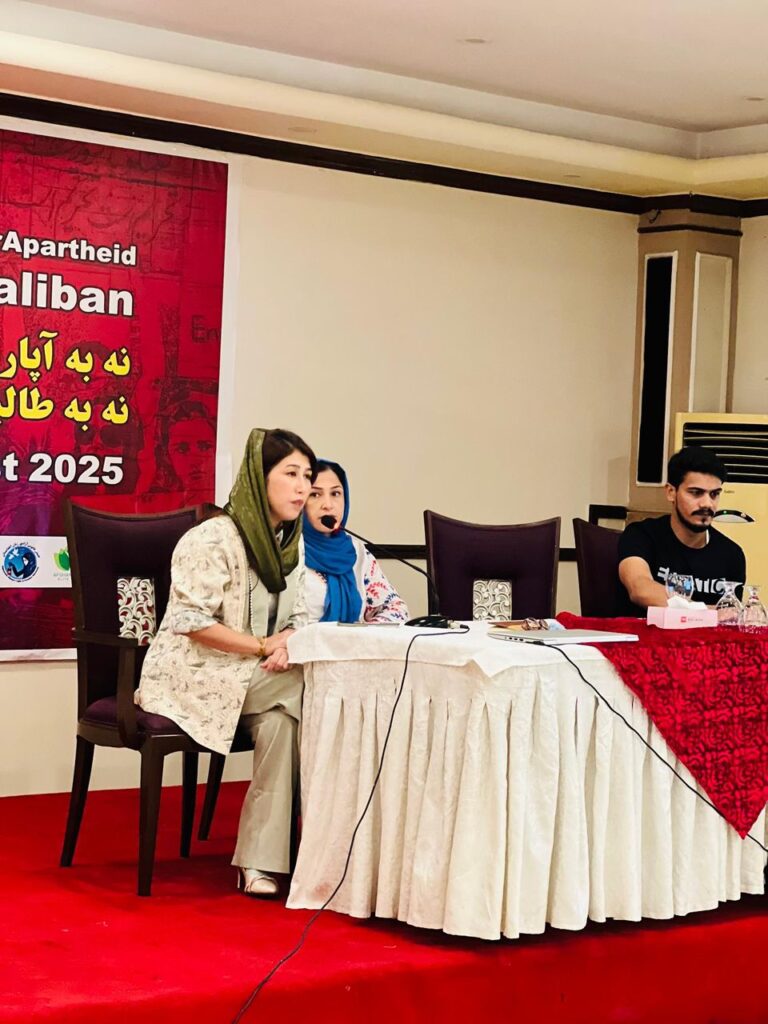
Nasrin Faramarz – University Lecturer and Member of the Leadership Council of the Afghanistan Women’s Justice Movement
Introduction
Greetings and respect to all the brave women and esteemed companions who have gathered today at the “Afghanistan Women’s Justice Movement” conference, to mark the anniversary of the fall of Afghanistan and to honor four years of women’s struggles in Afghanistan.
The title of my talk is “The Taliban in the International Court of Justice.”
First, I would like to briefly explain what I mean by this title and why I chose to raise this topic here today.
What is happening in Afghanistan today is not only a violation of Afghanistan’s domestic laws, but also a blatant breach of international law.
Therefore, it is imperative that the Taliban be prosecuted in international courts.
Pathways to Global Justice and Two Key Courts
In the realm of international law, there are two main institutions for addressing human rights violations:
- The International Criminal Court (ICC) – This court has jurisdiction over international crimes such as crimes against humanity, genocide, and war crimes. Afghanistan has been a party to the Rome Statute since 2003, which means the ICC can prosecute crimes committed in Afghanistan or by Afghan nationals.
- The International Court of Justice (ICJ) – This court resolves legal disputes between states and, in certain cases, can play an important role in matters with significant human rights implications.
In practice, for advocating justice for Afghan women, the ICC offers a more effective route, as it allows for the direct prosecution of individuals responsible for these crimes.
Gender Apartheid and Crimes Against Humanity
Gender apartheid refers to the creation and enforcement of an institutionalized system of discrimination and oppression based on gender—systematically depriving women and girls of fundamental rights, opportunities, and freedoms.
Although this crime has not yet been codified in international law, efforts are underway to criminalize it, and the process of adoption and enforcement could take at least five years.
At present, the Taliban’s violations of women’s rights—including restrictions on freedoms, arbitrary arrests, suppression of protests, and acts of torture—can be prosecuted under Article 7 of the Rome Statute as crimes against humanity, since these acts are systematic, widespread, and carried out with knowledge and intent.
Benefits of Criminalizing Gender Apartheid
In the future, criminalizing gender apartheid will make it possible to hold regimes accountable in international law even if they restrict fundamental rights and freedoms of women without resorting to physical violence or torture.
Proposed Action Plan
To prevent the continuation of the crisis facing Afghan women, three avenues should be pursued in parallel:
- Prosecution of the Taliban as perpetrators of crimes against humanity under Article 7 of the Rome Statute.
- International advocacy for the recognition of gender apartheid as a distinct crime in international criminal law.
- Establishment of a UN-mandated truth-finding commission to document human rights violations in Afghanistan—particularly violations of women’s rights—so that credible evidence can be gathered for use in international courts and to prevent the destruction or distortion of these records.



Thank you for your sharing. I am worried that I lack creative ideas. It is your article that makes me full of hope. Thank you. But, I have a question, can you help me? https://accounts.binance.com/vi/register?ref=MFN0EVO1